Free course · 9 lessons
How to keep a journal that's worth keeping
A free course in nine short lessons: why journals die, how to start one that lasts, and where the value actually is.
Read them in order or jump in anywhere. No signup, no email gate.
Lesson 1
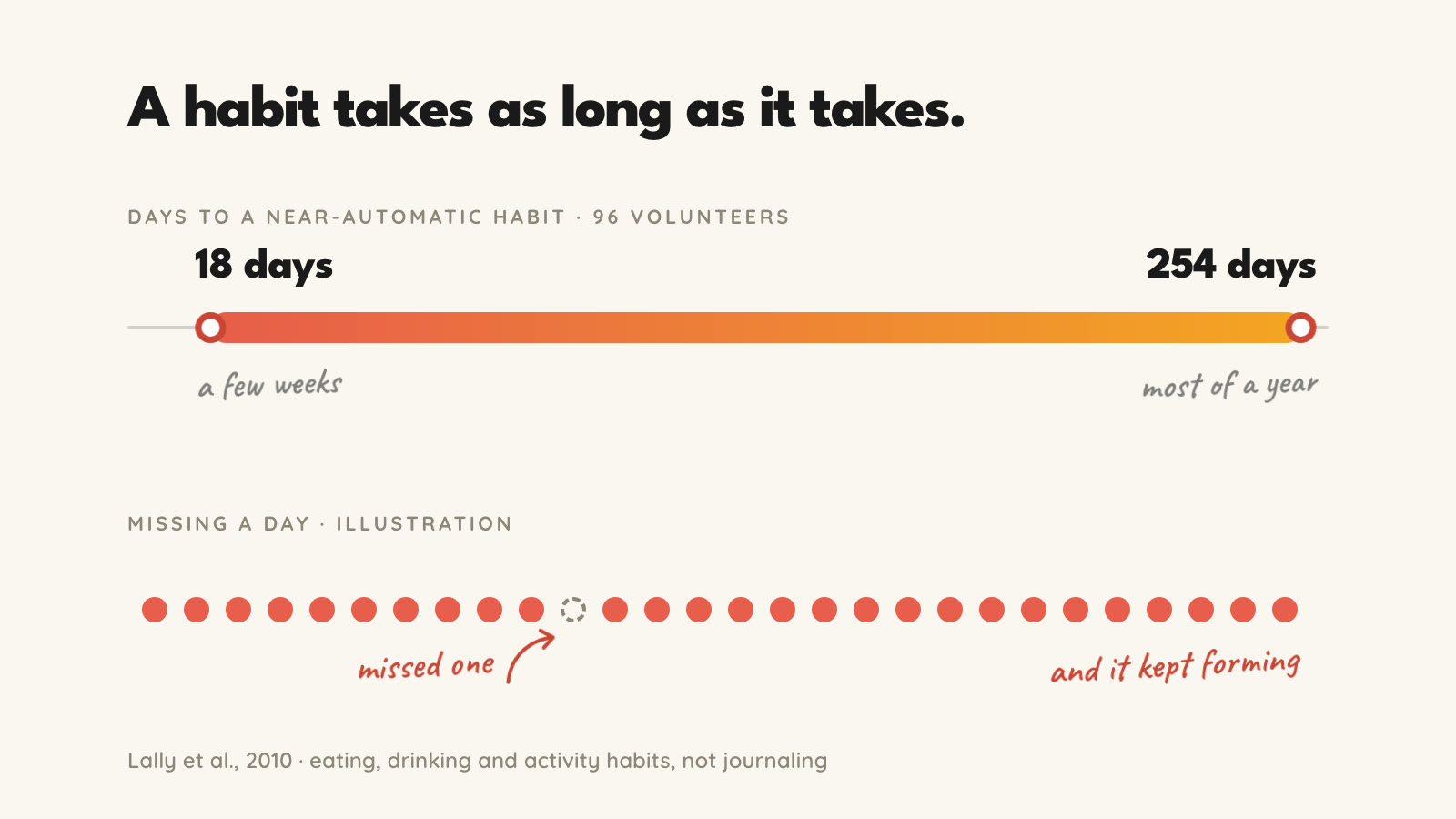
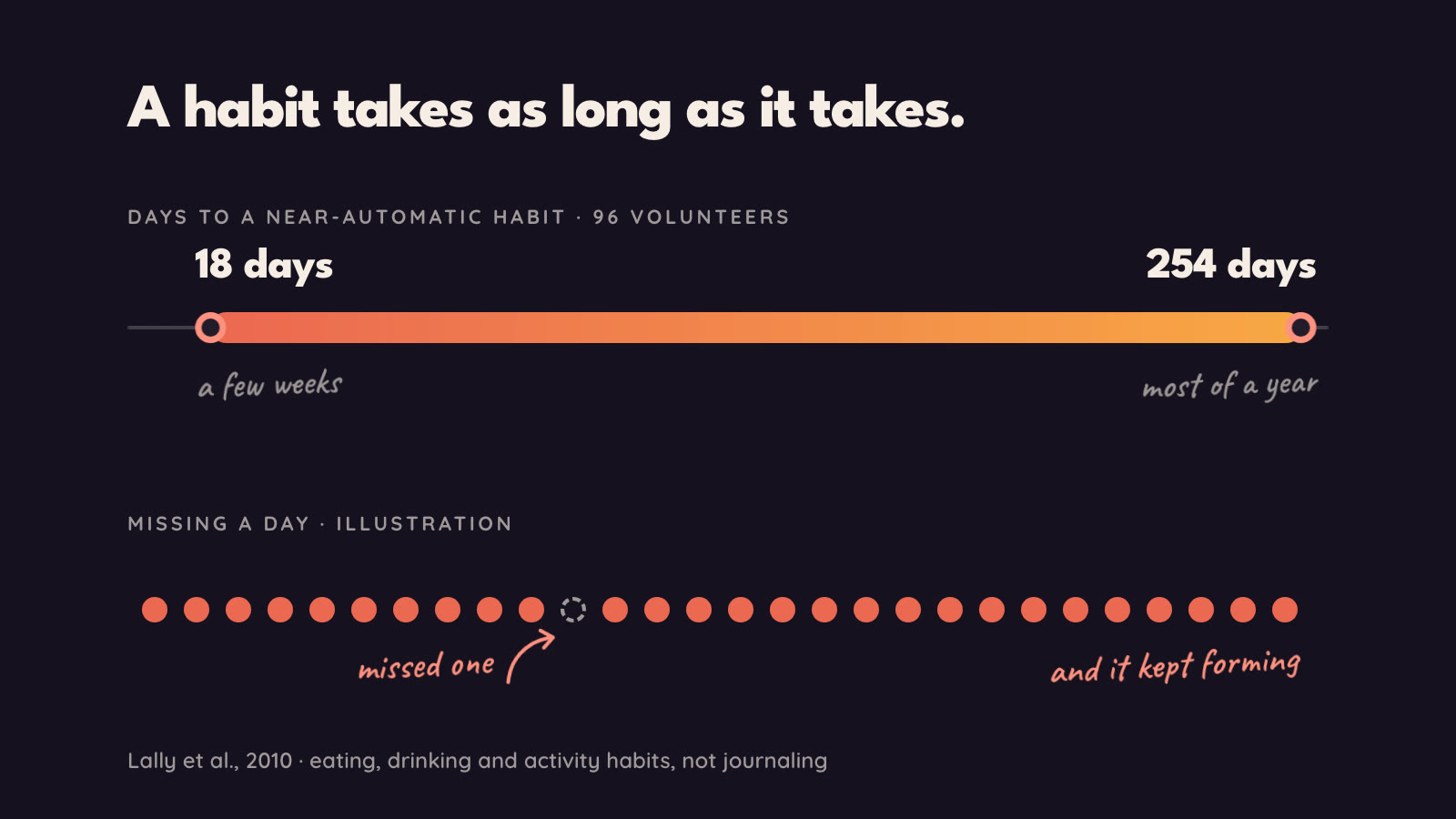
Why most journals die in week two
To start journaling, skip the notebook and the daily rule. Tie one small entry to a moment you already have, even a minute of talking, and let it grow.
Lesson 2
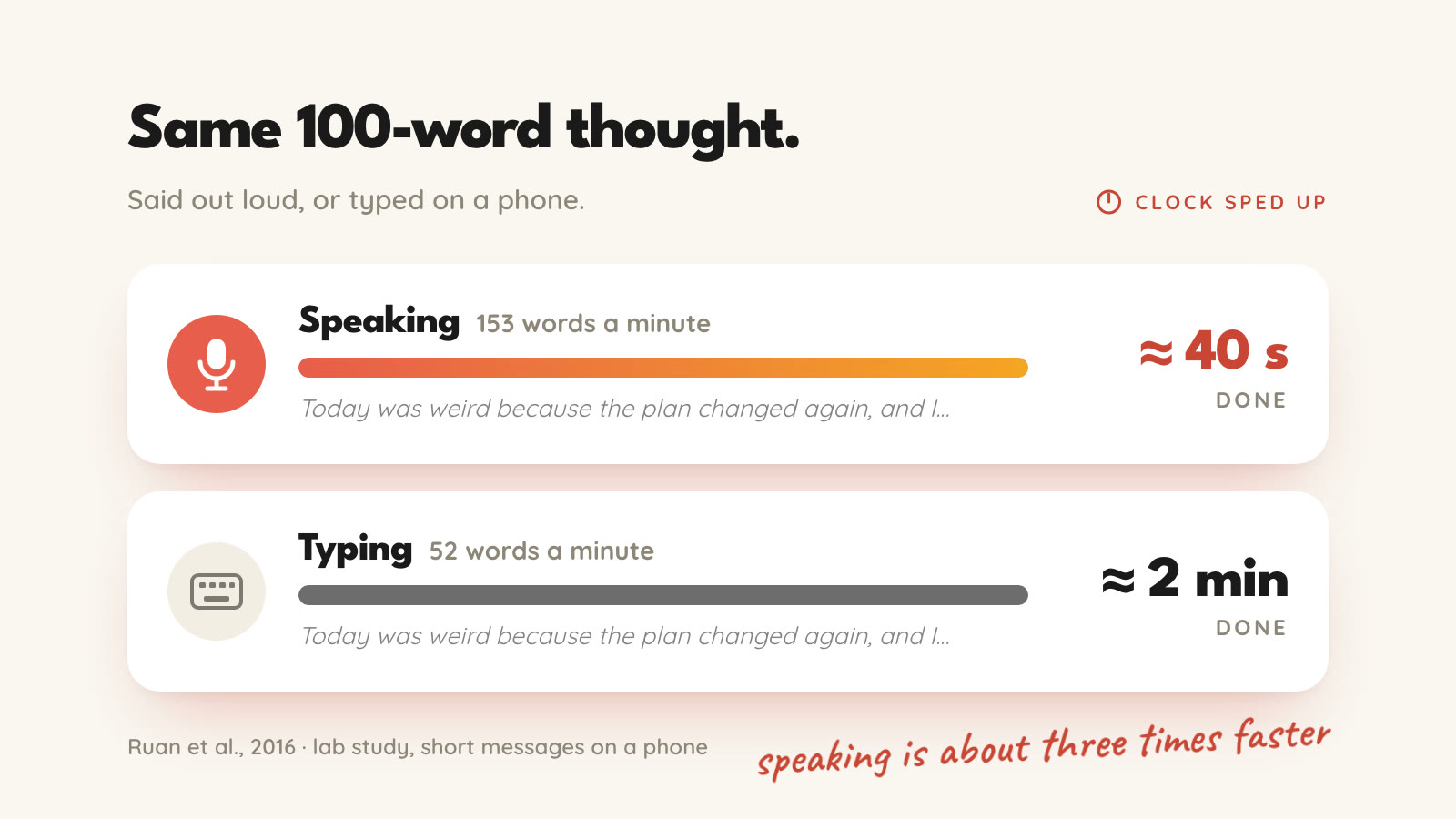
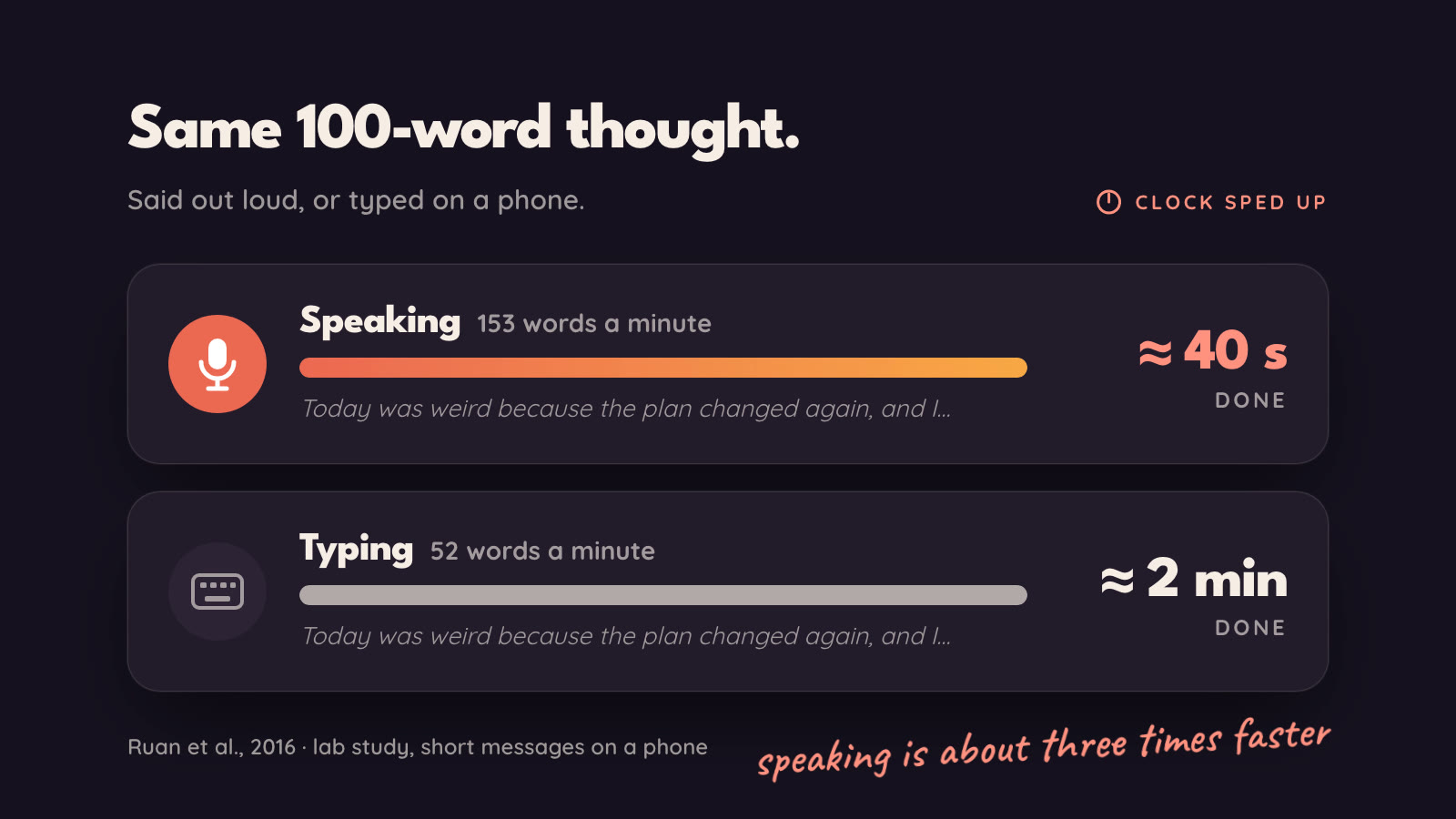
Talk or write: pick the medium you'll actually use
Voice journaling means saying your day out loud instead of writing it down. Why it sticks when a notebook doesn't, how to start, and what to do with the recordings.
Lesson 3
Empty your head
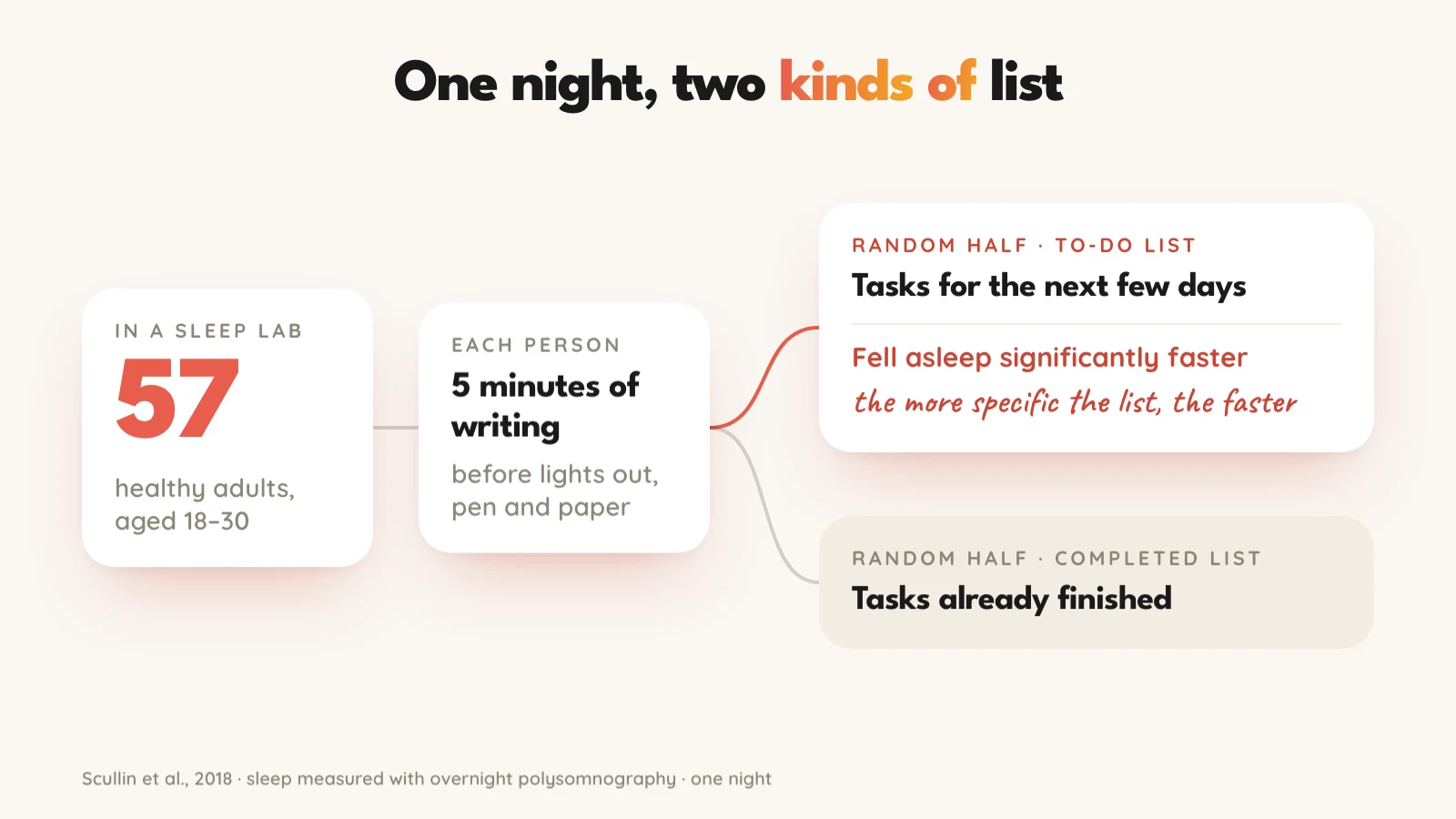
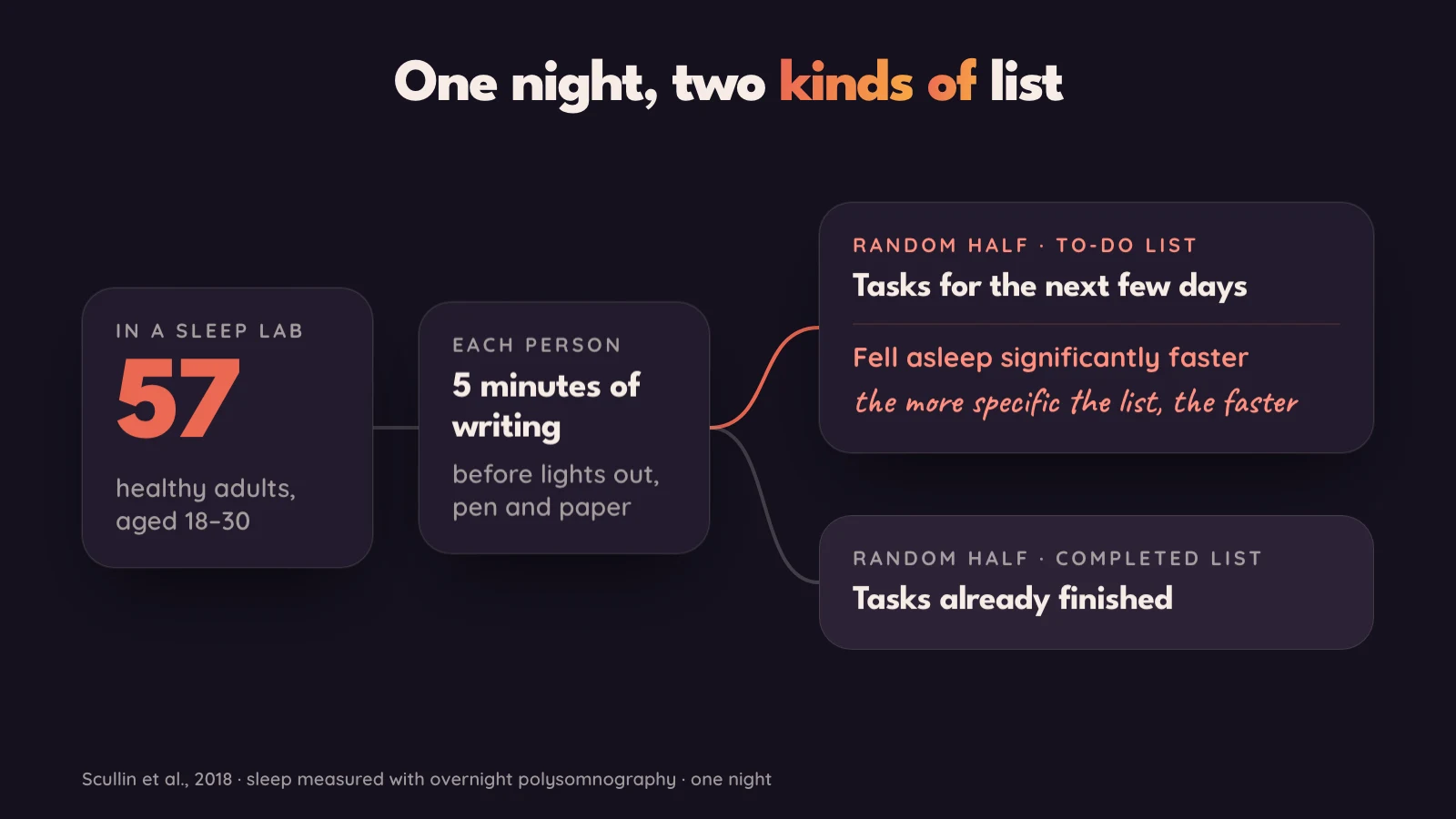
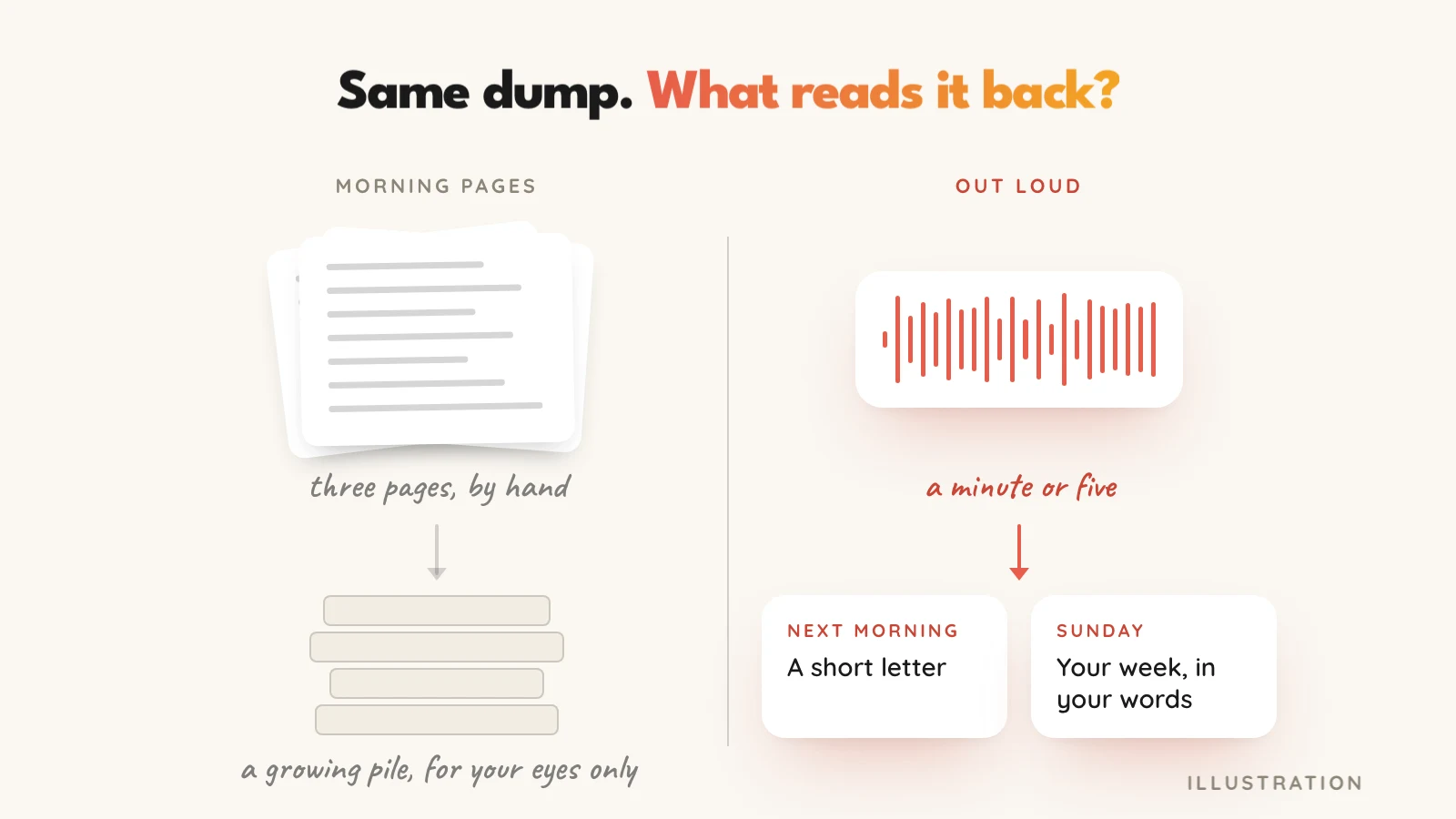
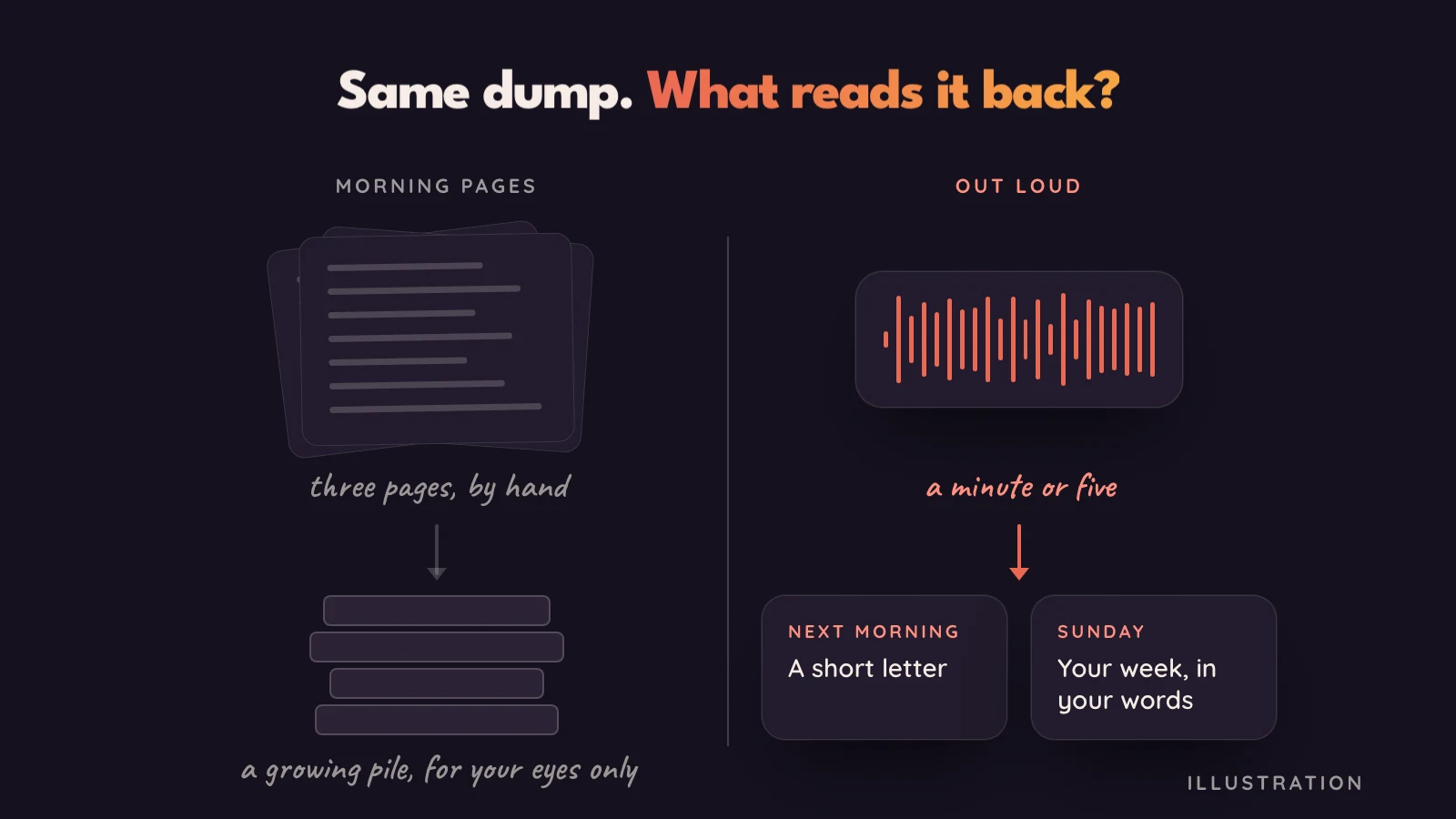
A brain dump means getting everything in your head out onto a page or a recording, unsorted. How to do one, voice or paper, and why the pile matters later.
Lesson 4
Empty your head, first thing in the morning
Morning pages are three longhand pages of stream-of-consciousness writing, first thing each morning. Why they work, why people quit, and a spoken version.
Lesson 5
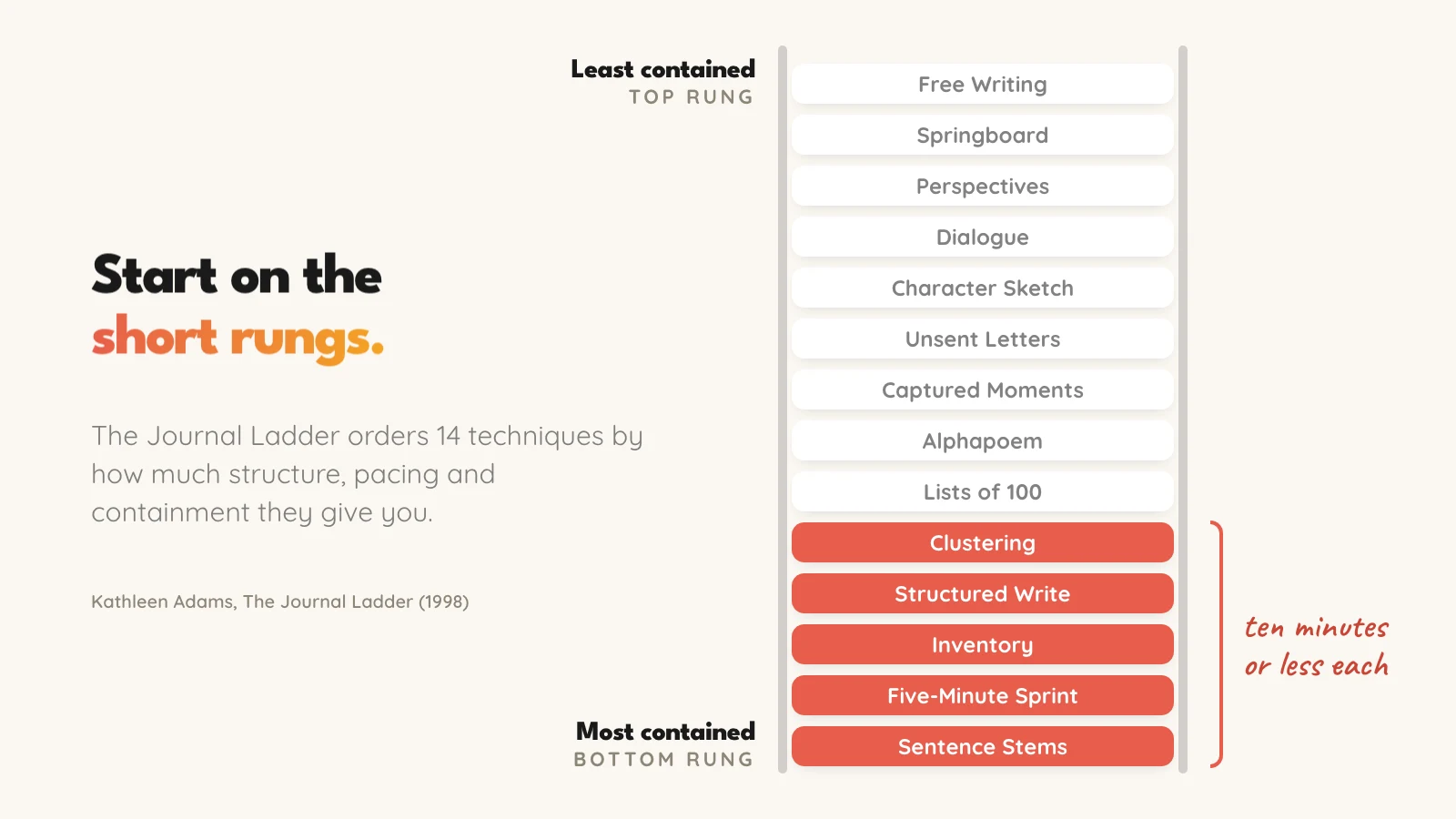
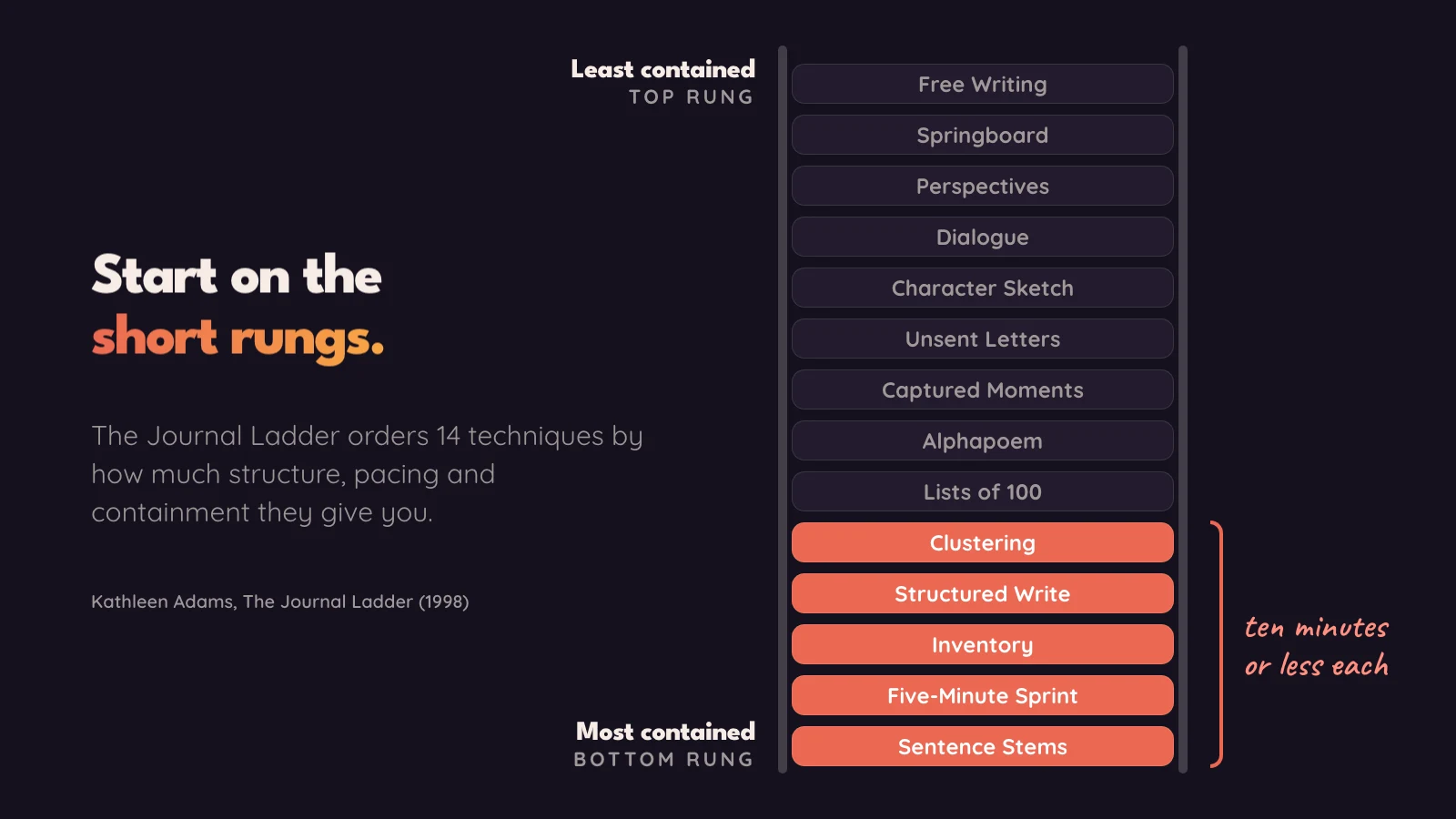
Short and contained: sentence stems and sprints
If you hate writing, skip the open page. Finish one sentence, write for five minutes, or make a short list, then stop. Or say it out loud instead.
Lesson 6
Questions that work
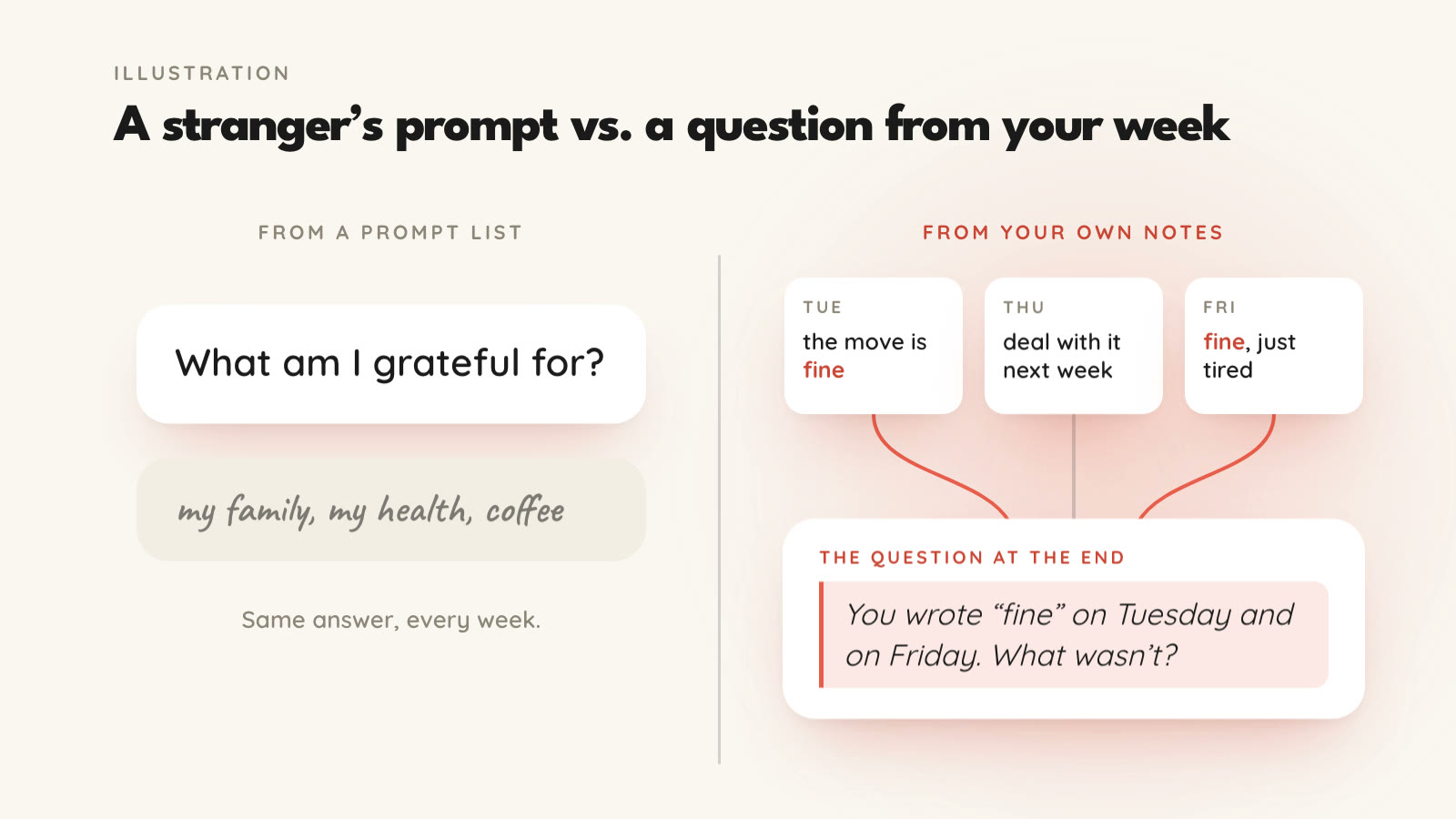
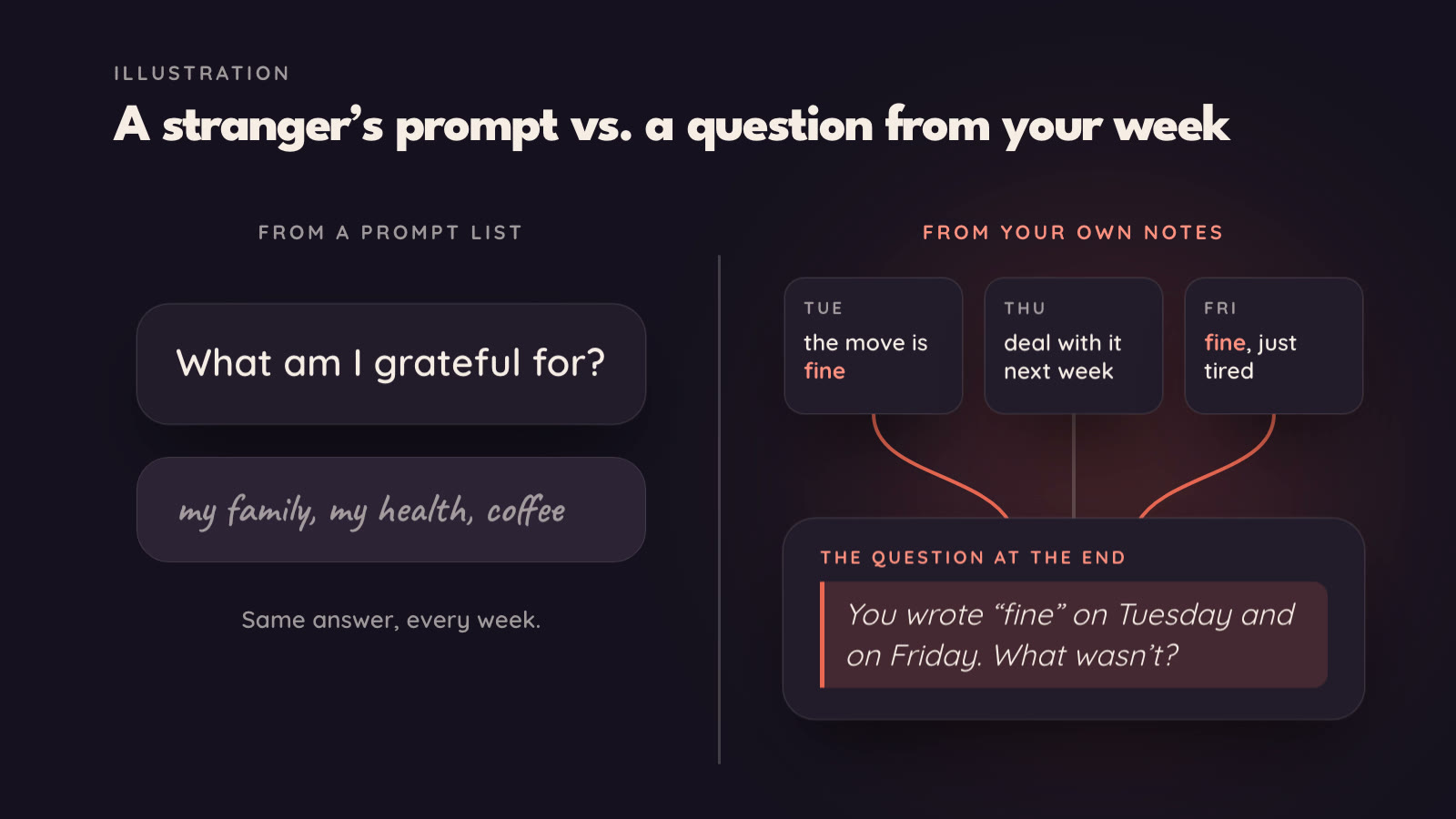
Short journal prompts for self reflection: end of day, end of week and when you feel stuck. Plus why a question built from your own words works better.
Lesson 7
Rereading: where the value actually is
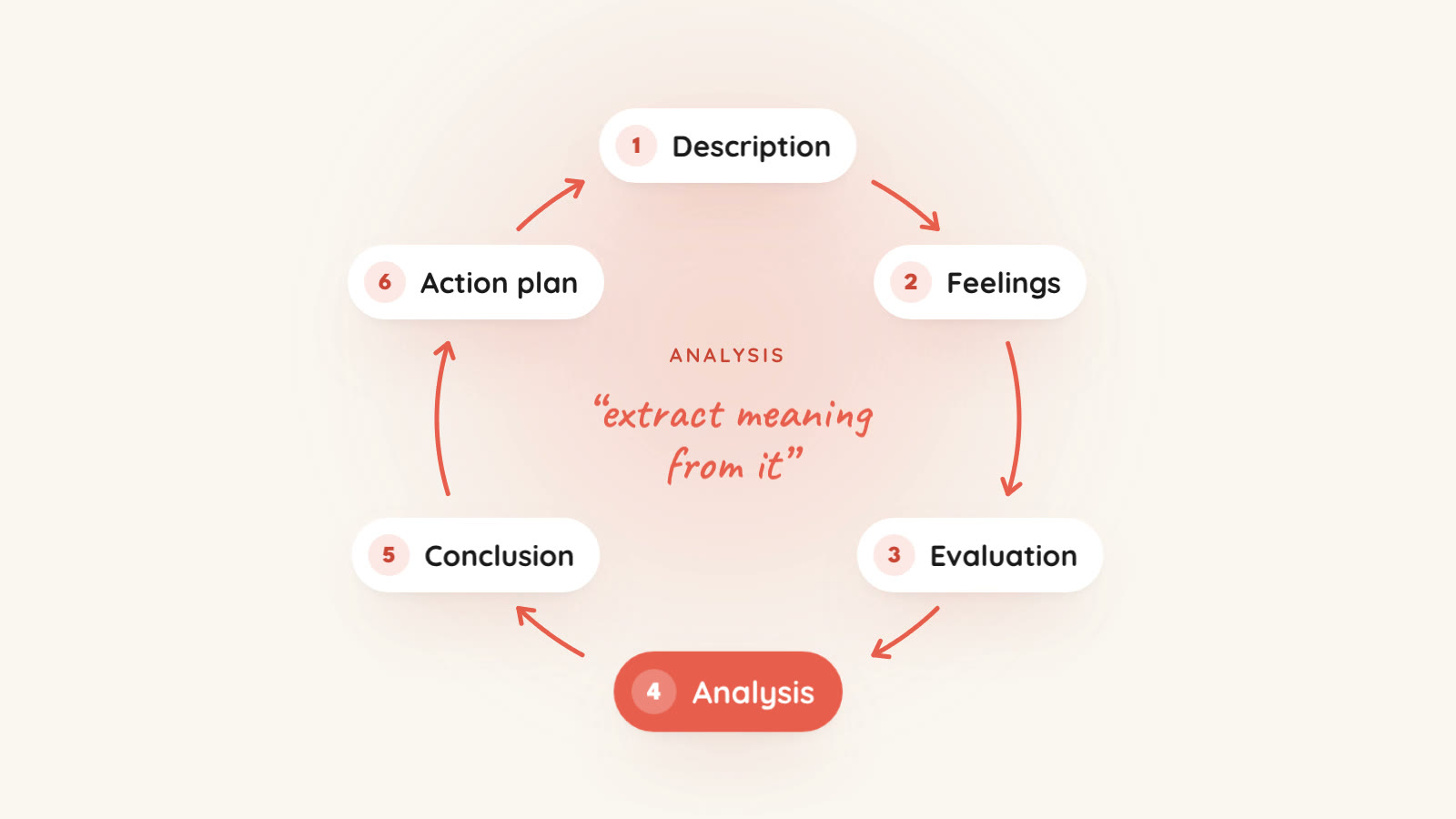
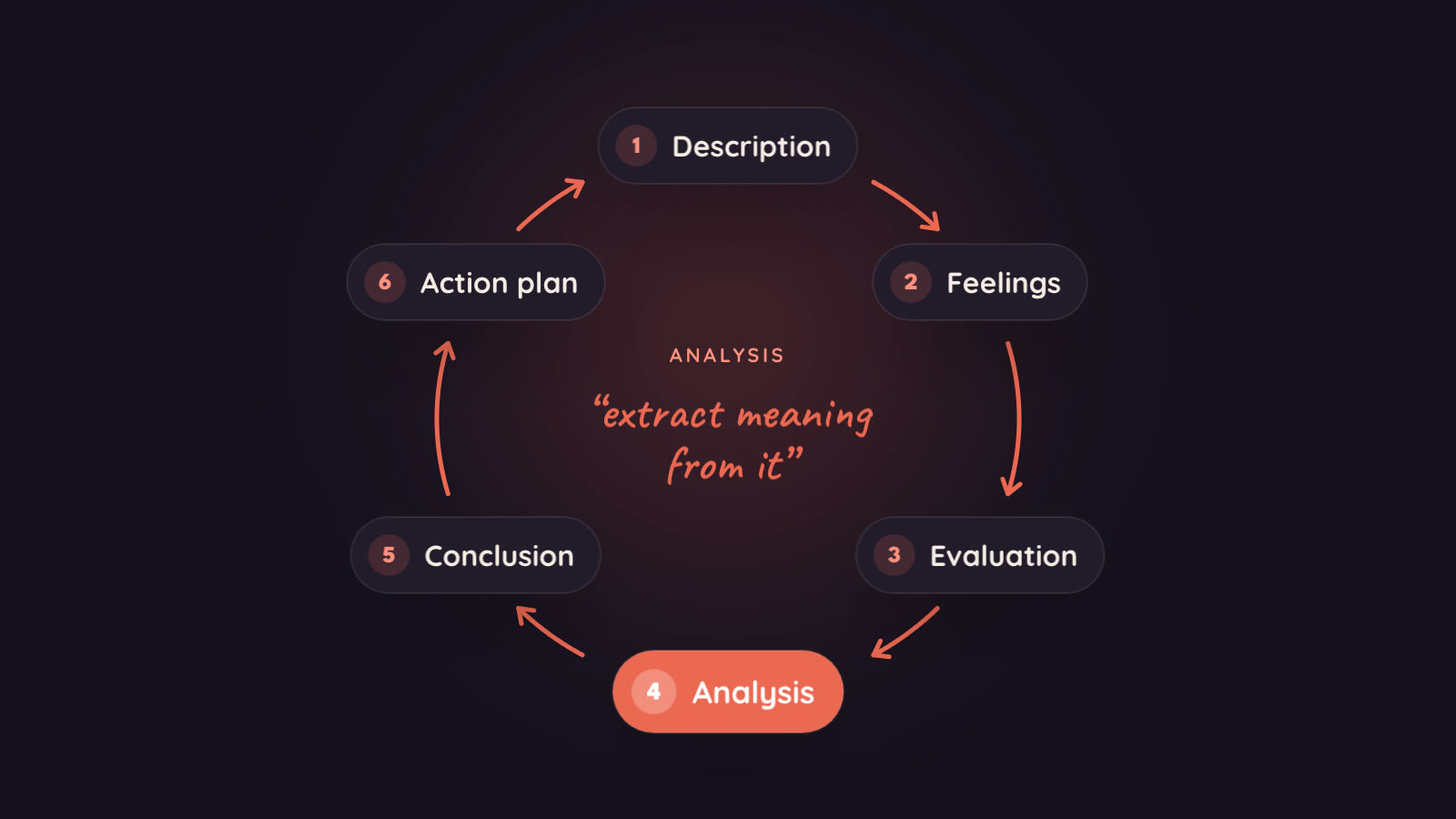
Reflective journaling means going back over what happened to learn from it. Why it works better with a few days of distance, and how to do a weekly reflection.
Lesson 8
The weekly review: one look back, once a week
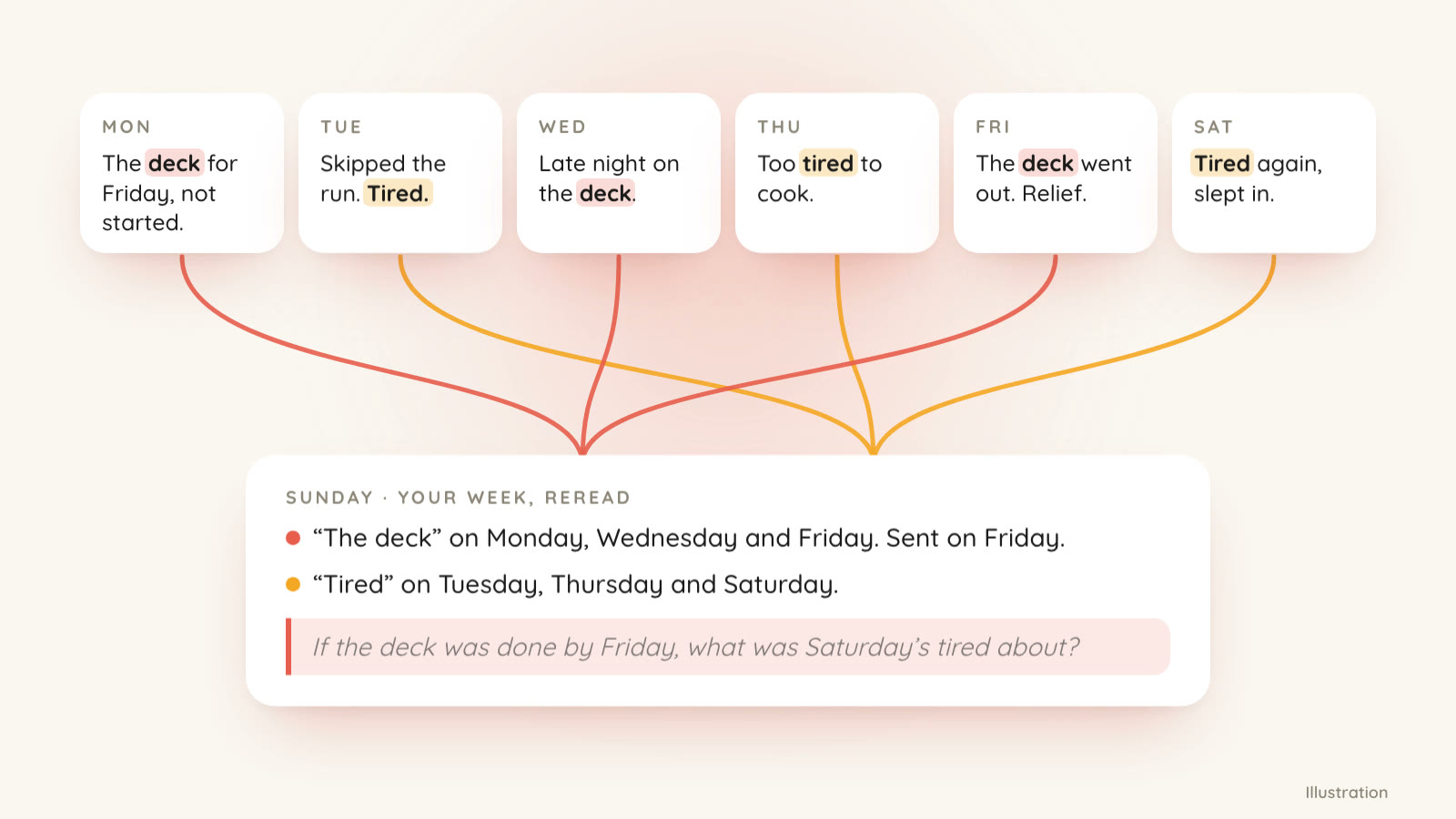
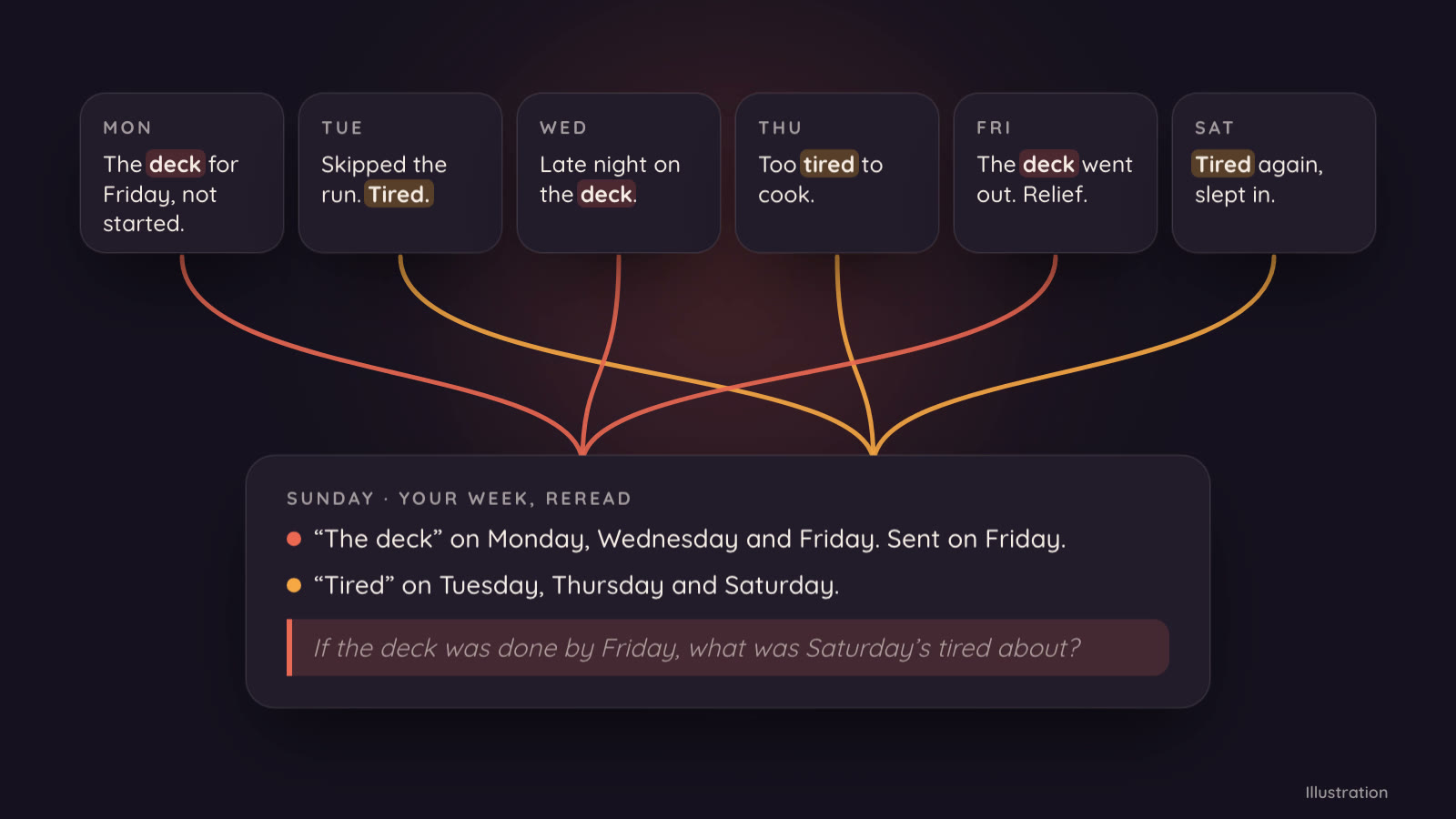
A weekly review of your journal means rereading the week once, marking what repeated, what you avoided and what changed, and ending with one question.
Lesson 9
What the research actually says
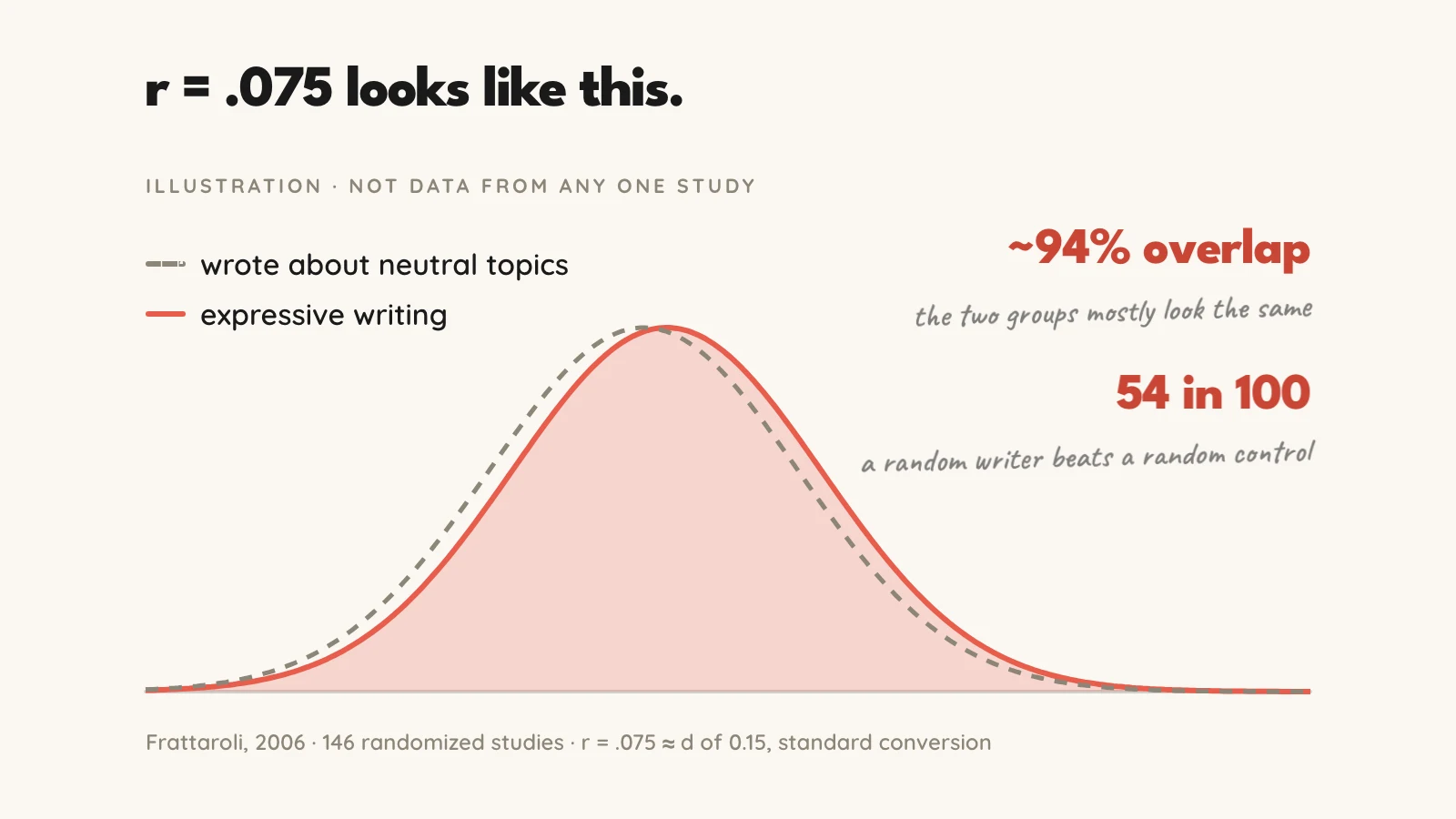
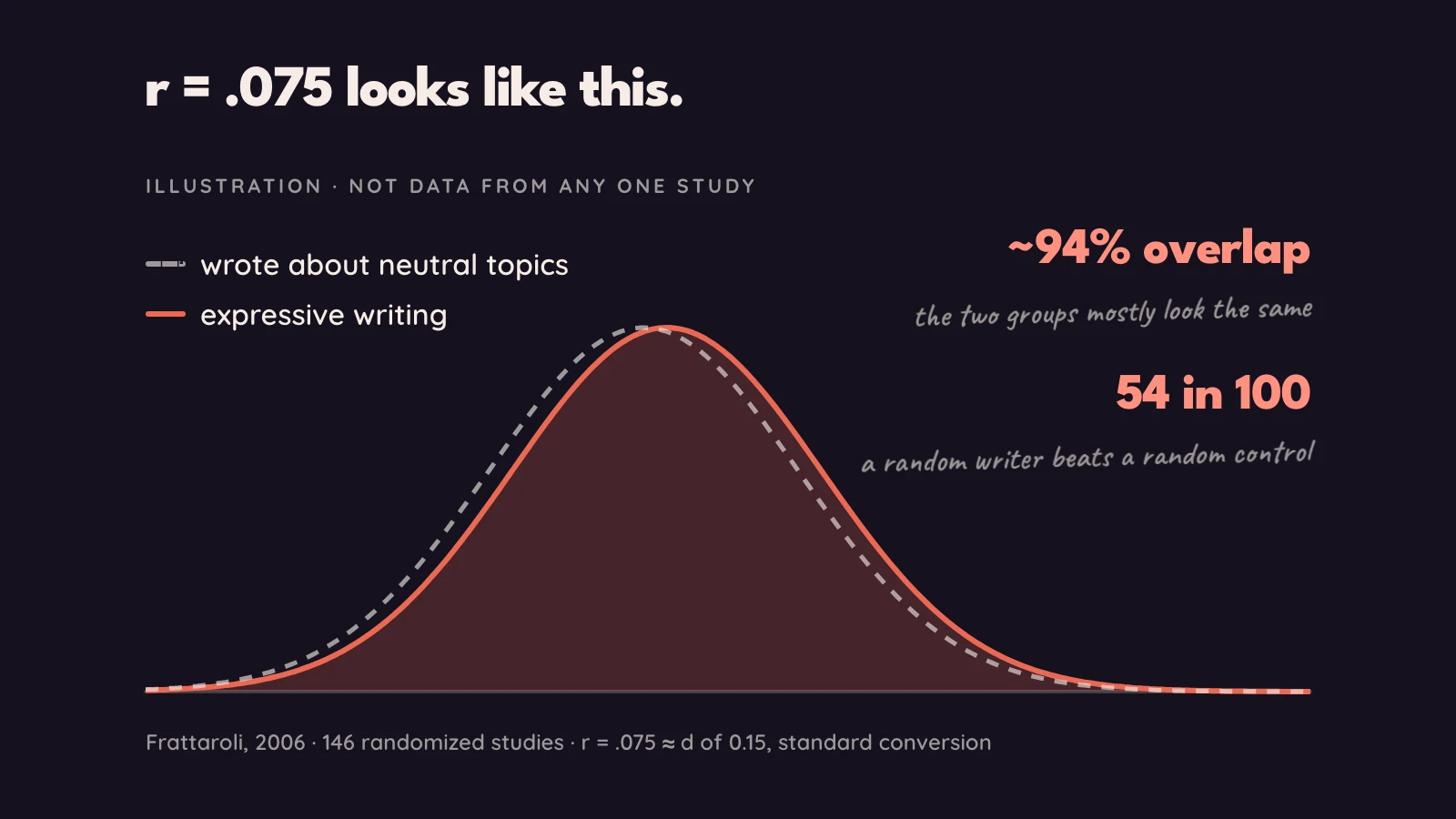
Expressive writing is a research protocol: 15 to 20 minutes about something upsetting, three to five times. What the studies measured, and how small the effect is.